
By the end of this Learning Unit, learners will:
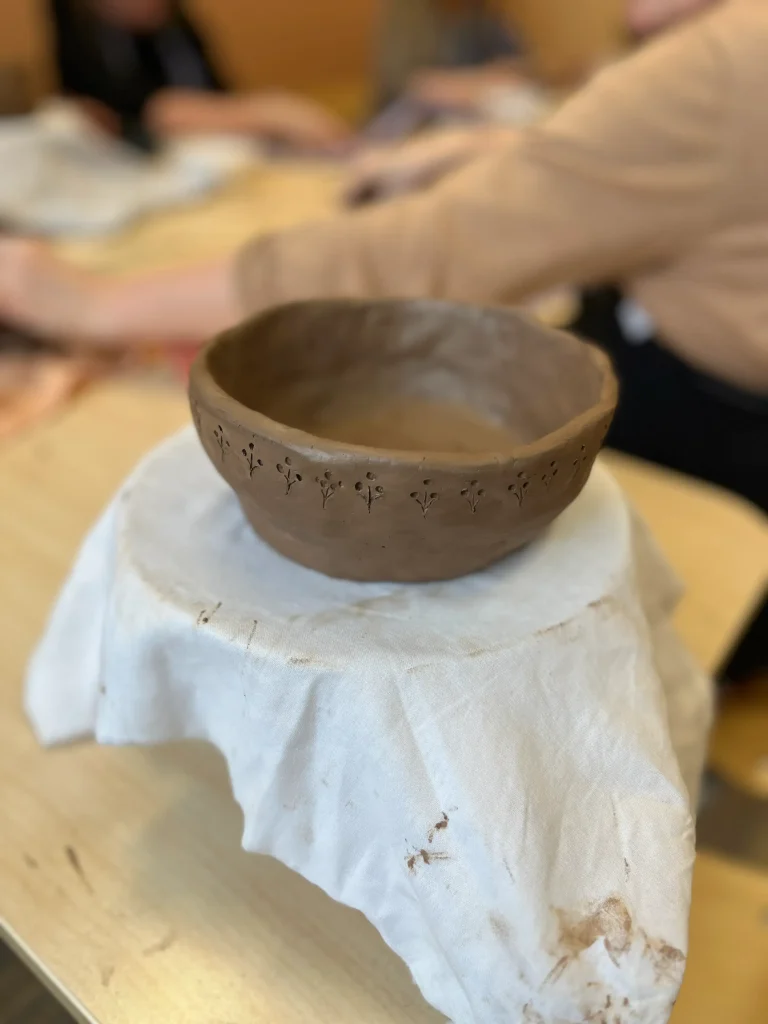
This Learning Unit combines theoretical exploration with hands-on practice, guiding learners to engage with cultural heritage, creativity, eco-design, and personal expression through the art of ceramics.
In the theoretical part, learners will:
– Begin by discovering what clay and ceramics are, how they have been used across different cultures and time periods, and how they appear in various forms of cultural expression (e.g., mythology, proverbs, and traditions),
– Explore the example of Narva Culture, one of the oldest Neolithic cultures in Europe, known for its unique ceramic techniques and decorations,
– Understand how ceramics provide insight into human history, daily life, and intercultural connections.
In the practical part, learners will:
– Learn the basics of modern handmade ceramics and explore tools and techniques used today,
– Develop clay-handling skills and produce personal ceramic pieces,
– Combine ancient motifs and forms with contemporary, eco-conscious approaches to design.
Our Learning Unit is based on an andragogical, learner-centered, and experience-based approach, combining cognitive, creative, and hands-on methods. The process connects the exploration of cultural heritage with the development of soft skills, creativity, and eco-conscious thinking—especially relevant for adult learners.
Participants begin by activating their prior knowledge and life experience, then build on it through inquiry-based and practical activities. They explore the cultural, historical, and symbolic meanings of ceramics across time and cultures, using the Narva Culture as a local example. Educators in other regions are encouraged to integrate their own local ceramic traditions for contextual relevance.
Through hands-on work with clay, learners engage in active experimentation, developing practical skills while expressing personal ideas and emotions. Designing their own ceramic object encourages them to apply eco-design principles, make conscious creative decisions, and reflect on sustainability, identity, and personal values.
Key methods include:
– Problem-based learning, where open-ended questions and creative tasks foster curiosity and independent thinking.
– Visual analysis through photos and videos of historical and modern ceramics,
– Collaborative reflection and peer dialogue to strengthen intercultural understanding and communication skills,
– Mindful engagement with natural materials, supporting emotional well-being and stress reduction.
Late Mesolithic Narva Stage in Estonia: Pottery, Settlement Types and Chronology. Eesti Arheoloogia Ajakiri: Journal of Estonian Archaeology, pp. 52–86.
The Narva Culture in Eastern Baltic Prehistory. Estonian Journal of Archaeology, 11(2), 93–115.
Ceramics: A World Guide to Traditional Techniques. Thames & Hudson.
[dflip id=”2680″][/dflip]